
Science Behind the Impact
Beyond the Police Report
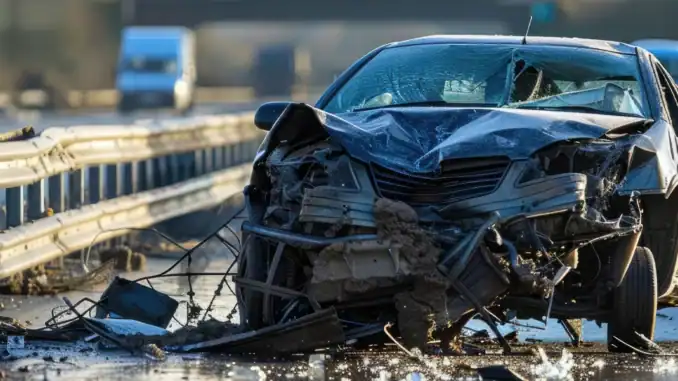
While a standard police report provides a basic overview of an accident, it is often limited by the officer’s time and resources at the scene. Forensic reconstructionists go much deeper. They treat the crash site as a scientific data set. By analyzing skid marks, crush patterns, and fluid trails, they can calculate variables that are invisible to the naked eye.
In complex cases—such as those involving commercial trucking, ride-share vehicles, or disputed right-of-way—the reconstructionist’s report often serves as the “silent witness” that settles the question of liability before the case ever reaches a jury.
The Tools of the Modern Reconstructionist:
- 3D Laser Scanning (LiDAR): Creating a millimeter-accurate digital twin of the crash site to preserve evidence before the road is cleared.
- Event Data Recorder (EDR) Imaging: Downloading “Black Box” data that records vehicle speed, steering angle, and braking force in the seconds leading to impact.
- Photogrammetry: Using drone footage and high-resolution photos to triangulate the exact positions of vehicles at the moment of first contact.
- Physics-Based Simulations: Running computer models to test different “what if” scenarios, such as how the crash would have changed if a driver had stayed within the speed limit.
Determining Velocity and Vector
One of the most critical aspects of reconstruction is determining Delta-V (the change in velocity during a collision). This calculation is vital because the severity of a victim’s injuries is directly proportional to the force of the impact. By examining the depth of the “crush” on a vehicle’s frame, experts can determine the speed of the striking vehicle with remarkable accuracy.
Furthermore, reconstruction can identify Avoidability. An expert can determine exactly when a hazard became visible to a driver and whether that driver had enough time to react. If the math proves a driver had four seconds to brake but didn’t tap the pedal until 0.5 seconds before impact, it provides irrefutable evidence of distracted driving or gross negligence.
Challenging the “He Said, She Said” Narrative
Eyewitnesses are notoriously unreliable under the stress of a traumatic event. They may misjudge speeds or forget the order of events. Forensic reconstruction bypasses human bias. If a defendant claims they were traveling at 35 mph, but the momentum analysis shows their vehicle pushed a parked SUV thirty feet down the road, the science will expose the lie.
This objective clarity is particularly useful in cases of Comparative Fault. A reconstructionist can precisely allocate percentages of blame by showing, for instance, that while one driver ran a stop sign, the other driver’s excessive speed made the collision unavoidable.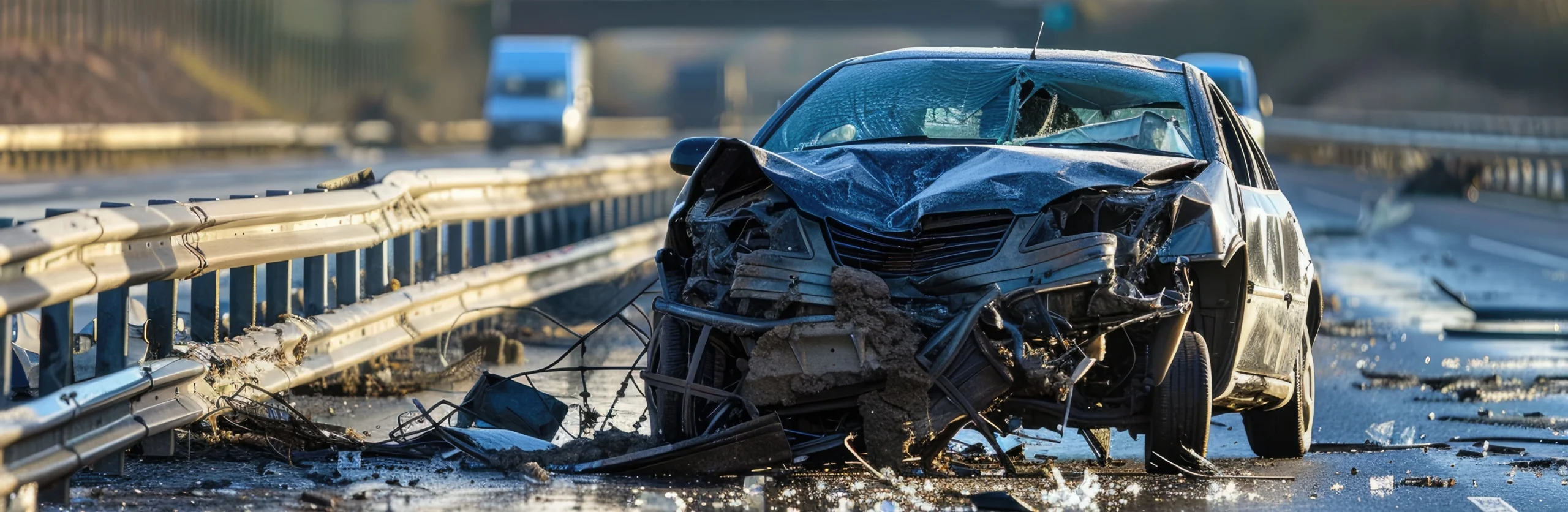
Strategic Value in Litigation
For a personal injury plaintiff, the reconstruction report is more than just a document; it is a settlement lever. When an insurance company is presented with a 3D animation of the crash that matches the physical evidence perfectly, they are much more likely to offer a fair settlement rather than risk a trial where a jury will see that same compelling visualization.
Conclusion: Turning Data into Justice
In conclusion, forensic accident reconstruction is the bridge between the chaos of a collision and the clarity of a courtroom. In 2026, the complexity of modern vehicles and the density of our roadways make these experts indispensable. They ensure that the truth isn’t lost in the wreckage.
By turning physics into testimony, reconstructionists provide the objective foundation necessary to hold negligent parties accountable. For victims, this means that their road to recovery is paved with empirical evidence rather than uncertainty. Ultimately, while an accident can change a life in a fraction of a second, forensic science works tirelessly to ensure that the legal consequences of that second are handled with precision and justice.
Leave a Reply