
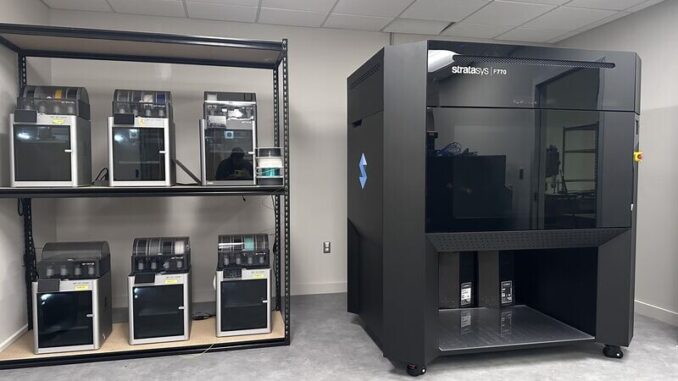
Stratasys v. Bambu Lab:2026 Trial Dates and PTAB Invalidation Updates
The additive manufacturing industry is currently bracing for the “trial of the decade” as the patent infringement battle between industry pioneer Stratasys and the rapidly ascending Bambu Lab reaches its climax. Filed in the Eastern District of Texas (Marshall Division) in August 2024, the litigation—comprising cases 2:24-cv-00644 and 2:24-cv-00645—has been consolidated into a single powerhouse proceeding (Case No. 2:25-cv-00465-JRG) for 2026. As of March 17, 2026, the court has locked in a trial commencement date for June 1, 2026, while parallel proceedings at the Patent Trial and Appeal Board (PTAB) have created a complex “3-1” score in favor of Bambu Lab’s invalidation attempts.
The Technical Battleground: Purge Towers and Heated Platforms
At the heart of Stratasys’ complaint is the allegation that Bambu Lab’s entire flagship lineup—including the X1-Carbon, P1S, and the A1 series—relies on proprietary technology that Stratasys spent decades developing. The lawsuit specifically targets ten U.S. patents that cover features now considered standard in high-performance desktop 3D printing. The implications are staggering: if Stratasys wins, it could potentially act as a “gatekeeper” for the entire consumer and prosumer FDM market, demanding royalties for features that many hobbyists currently take for granted.
- Patent 9,421,713 (Purge Towers): This patent covers the method of printing a sacrificial “tower” to clear a nozzle during material or color swaps. In early 2026, the PTAB instituted an Inter Partes Review (IPR), finding a “reasonable likelihood” that this patent could be invalidated based on prior art from the open-source RepRap community.
- Patent 9,592,660 (Heated Platforms): Stratasys claims ownership over specific systems for heated build platforms that allow for high-temperature thermoplastic printing. This is another area where the PTAB has agreed to review the patent’s validity in 2026.
- Patent 8,747,097 (Network Management): In a rare win for Stratasys in late 2025, the PTAB denied Bambu Lab’s request to review this patent, which covers the remote management of 3D printers. This means the patent remains active and will be a major focal point during the June trial.
The 2026 Consolidation and Venue Conflict
Throughout 2025, Bambu Lab attempted to have the case dismissed or moved to the Western District of Texas, arguing that the Eastern District was an improper venue and that its U.S. subsidiary, Bambu Lab USA, was a required party excluded from the suit. However, in May 2025, Judge J. Rodney Gilstrap denied these motions, ruling that Stratasys’ choice of venue was valid and that the absence of the U.S. subsidiary did not prevent the court from granting relief. By June 2025, both parties agreed to consolidate all claims into one case to streamline the 2026 proceedings. This move is intended to prevent conflicting rulings across different divisions of the Texas court system.
Internal Linking and Corporate Strategy
The Stratasys v. Bambu Lab litigation is a primary example of “IP warfare” used to curb market cannibalization, a trend also seen in the Palworld v. Nintendo lawsuit and the Ripple v. SEC settlement. On the individual and institutional rights front, the Perkins Coie lawsuit and Texas Ten Commandments lawsuit highlight how the court system handles high-stakes ideological and financial disputes. For those tracking consumer payouts and corporate accountability in 2026, the AT&T lawsuit payout and the Gmail lawsuit claim provide essential context on the legal landscape.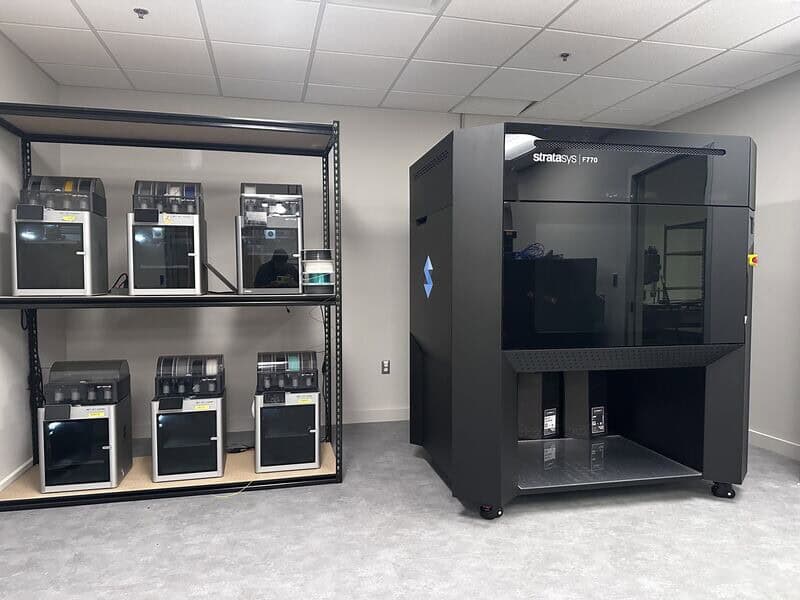
The “RepRap” Defense: Community Prior Art
Bambu Lab’s primary defense strategy relies on the history of the 3D printing community itself. In filings throughout late 2025, the company cited “prior art” from KISSlicer documentation and early RepRap forum posts to argue that many of Stratasys’ “inventions” were actually developed collaboratively by the open-source community before the patents were filed. The 3D printing community has largely rallied behind Bambu Lab, fearing that a Stratasys victory would stifle innovation and drive up the cost of entry-level machines. However, legal experts note that proving “obviousness” in a jury trial is notoriously difficult, especially against a company like Stratasys that holds over 2,600 international patents.
What’s Next: The June 2026 Jury Trial
As we approach the June 1 trial date, both companies are preparing for a battle of experts. Stratasys is seeking a permanent injunction that could halt the sale of Bambu Lab printers in the United States, along with significant financial damages for willful infringement. Conversely, Bambu Lab is pushing for a total invalidation of the asserted patents. A final ruling from the PTAB on the three contested patents is expected by July 2026, which could override the jury’s verdict if the patents are found to be void after the trial concludes.
2026 Key Legal Milestones for 3D Printing
| Event | Anticipated Date |
|---|---|
| Trial Commencement (Consolidated Case) | June 1, 2026 |
| PTAB Final Decision (Purge Tower Patent) | July 14, 2026 |
| H2D “Pro” Printer Launch Window | Spring 2026 |
Conclusion
The outcome of Stratasys v. Bambu Lab will define the future of the FDM market for the next decade. Whether Stratasys re-establishes itself as the dominant gatekeeper or Bambu Lab successfully “liberates” these features via the PTAB will determine how much you pay for your next printer. We will continue to monitor the Texas court records and provide updates as the pre-trial hearings conclude in May 2026. For more on protecting your intellectual property and navigating the 2026 legal landscape, see our guides on the no proof class action lawsuit 2025 and the Bill Miller Bar-B-Q lawsuit.
Leave a Reply