
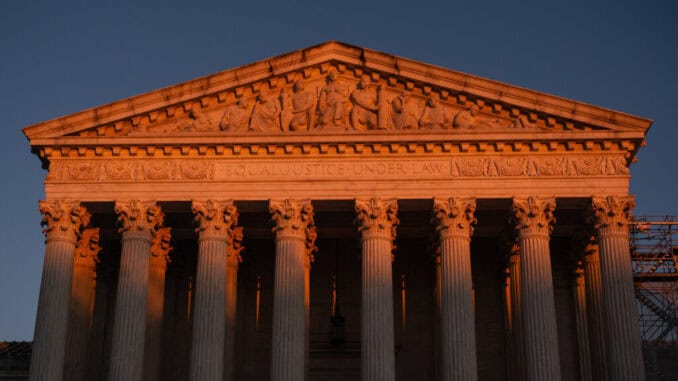
The High Court Steps In: Supreme Court Agrees to Hear Pivotal Boulder Climate Case in 2026
As of March 17, 2026, the landscape of American climate litigation has shifted from a series of “fragmented” state battles to a singular, high-stakes showdown at the United States Supreme Court. On February 23, 2026, the Supreme Court officially agreed to hear the case of City and County of Boulder v. Suncor Energy and ExxonMobil. This decision marks the first time the high court has agreed to weigh in on the substantive merits of whether state law can be used to hold fossil fuel companies liable for the global effects of climate change. While the court previously rejected similar appeals from the industry—most notably the 2025 rejection of a bid to kill the Honolulu climate case—this new grant of certiorari signals a potential “turning point” that could effectively freeze or dismiss dozens of similar lawsuits nationwide.
The Boulder Case: From 2018 to the 2026 Supreme Court
The journey of the Boulder lawsuit is a testament to the “long game” of environmental litigation. Originally filed in April 2018, the City of Boulder and Boulder County alleged that ExxonMobil and Suncor knowingly contributed to climate change while concealing the dangers of their products. For seven years, the case was mired in jurisdictional disputes, with energy companies fighting to move the trial to federal court, while local officials fought to keep it in Colorado state court. In May 2025, the Colorado Supreme Court handed the plaintiffs a major victory, ruling that the Clean Air Act did not preempt state law claims and that the case could proceed to discovery.
However, the U.S. Supreme Court’s decision to take up the appeal on February 23, 2026, has put that momentum on ice. The justices will now consider a fundamental constitutional question: Does federal law preclude state-law claims seeking redress for injuries allegedly caused by greenhouse-gas emissions that cross state and international borders? This focus on “jurisdictional boundaries” is a recurring theme in 2026 litigation. Much like the Wisconsin congressional redistricting lawsuit, where the core issue is who has the authority to “draw the lines,” the Boulder case is about whether a single city in Colorado has the legal standing to dictate energy policy for the entire world.
The “Endangerment Finding” Factor
A critical variable in the 2026 legal calculus is the Trump administration’s recent repeal of the “Endangerment Finding”—the scientific determination that greenhouse gases threaten public health. The repeal, which is not scheduled to go into effect until April 20, 2026, could strip the EPA of its primary authority to regulate emissions under the Clean Air Act. Paradoxically, legal analysts suggest this could help fossil fuel companies in the Boulder case. If the federal government is no longer regulating these emissions, the industry may argue that “federal common law” should return to fill the void, potentially providing them with even broader immunity than the Clean Air Act itself. This mirrors the high-stakes regulatory battles seen in the Humana Medicare Advantage ratings lawsuit, where the shift in federal metrics and definitions has triggered a wave of litigation over corporate accountability and government overreach.
The “Freeze” on National Climate Litigation
The Supreme Court’s decision to hear the Boulder case has had an immediate “chilling effect” on other climate lawsuits across the country. In states like California, Washington, and Illinois, judges are already granting motions to “stay” or pause proceedings until SCOTUS issues its final ruling, expected in the winter of 2026 or spring of 2027. This “litigation freeze” is a tactic often seen when a higher court takes up a case that could invalidate dozens of “copycat” suits. This strategy of centralizing a legal issue to stop a “wave” of individual actions is also evident in the Sixt class action lawsuit settlement, where a single large-scale agreement was reached to resolve years of systemic billing complaints across multiple jurisdictions.
Internal Linking and Institutional Trust
The Boulder case is not just about money; it is about the “integrity of the record.” Plaintiffs argue that the industry engaged in a “decades-long story of deceit.” This focus on reputational damage and the “truth” behind public statements is a cornerstone of 2026 law. For example, the Mario Lopez lawsuit 2025 deals with the fallout of digital records and the cost of a damaged reputation in a world where “everything is recorded.” Similarly, the Fox News defamation lawsuit Gavin Newsom hinges on whether a major media entity can be held liable for its “packaging” of information. In all these cases, the 2026 courts are being asked to define the boundary between “protected speech” and “actionable deception.”
The Billions at Stake: Damages and Infrastructure
The financial implications of the Boulder case are staggering. Boulder County alone faces hundreds of millions of dollars in costs related to infrastructure repairs, emergency management, and flood mitigation caused by an altered climate. The lawsuit aims to shift these costs from local taxpayers to the corporations that “knowingly caused the harm.” This pursuit of “reparative justice” mirrors the Amazon refund class action lawsuit, where the goal was to force a massive entity to pay for the “unintended consequences” of its automated systems. In 2026, the question for the Supreme Court is whether the judiciary is the appropriate place to handle these “societal challenges” or if they belong exclusively in the halls of Congress.
Looking Ahead: The October 2026 Term
Oral arguments for the Boulder case are expected to take place in the fall of 2026. Legal observers are particularly interested in whether the court will rule broadly—potentially granting the oil industry “immunity” from state-level climate lawsuits—or narrowly on a procedural point. If the court rules for the energy companies, it could void not just the Boulder case, but more than 33 other lawsuits currently pending in 20 different jurisdictions. This “all or nothing” legal climate is a hallmark of current high-profile cases, such as the Lisa Cook lawsuit, where the final outcome has the power to reshape an entire sector of the American economy.
Impact on Corporate Strategy and Investing
For investors in companies like Exxon, Shell, and BP, the 2026 Supreme Court case is the “most significant event of the decade.” In their recent SEC filings, these companies have characterized the litigation as an “unprecedented threat” to their financial condition. A win for Boulder could “open the floodgates” to billions in damages, while a win for the industry would remove a “cloud of legal uncertainty” that has depressed share prices for years. This focus on “clearing the clouds” is also seen in the AT&T class action lawsuit 2025, where the resolution of massive data breach claims is seen as a necessary step for the company to regain public and investor trust.
Conclusion
The Boulder v. ExxonMobil case is the “super bowl” of climate litigation. By agreeing to hear the case, the Supreme Court has signaled that it is ready to resolve the “jurisdictional chaos” that has defined the last eight years of environmental law. Whether the justices affirm a city’s right to seek damages or shield the energy industry from “fragmented” local actions, the 2026 ruling will define the limits of state power in the face of a global crisis. We will provide a full breakdown of the oral arguments as they occur this October, along with live updates on how this case affects the dozens of “copycat” lawsuits currently on hold across the United States.
Leave a Reply