
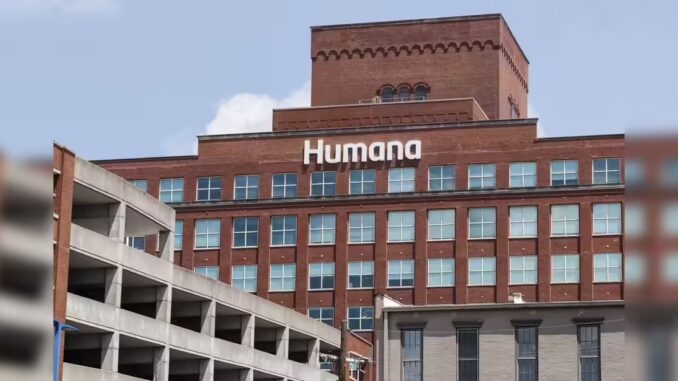
The $3 Billion Battle Moves to the 5th Circuit
As of March 2026, the financial future of Humana—the nation’s second-largest Medicare Advantage (MA) provider—is hanging in the balance at the 5th U.S. Circuit Court of Appeals. Following a string of legal setbacks in lower courts, the insurer is doubling down on its effort to force the Centers for Medicare & Medicaid Services (CMS) to recalculate its “Star Ratings” for the 2025 and 2026 plan years. This litigation is not merely a technical dispute over paperwork; it is a multibillion-dollar conflict that could fundamentally reshape how private insurers are incentivized to provide quality care to millions of American seniors.
The Core of the Dispute: Three Failed “Secret Shopper” Calls
Humana’s legal battle centers on a granular but incredibly consequential metric: the accuracy and accessibility of its foreign-language interpreter services. In 2024, as part of its annual quality assessment, CMS conducted “secret shopper” test calls to Humana’s customer service centers. The agency determined that three of these calls were unsuccessful, which triggered a catastrophic downward spiral in Humana’s star ratings. Specifically, several of Humana’s largest contracts dropped from 4 or 4.5 stars down to a 3.5-star rating.
In its filings, Humana argues that the CMS “no-callbacks” policy is “arbitrary and capricious.” The insurer claims that two of the disputed calls were disconnected due to technical third-party internet issues beyond their control, and a third involved a “silent caller” who never initiated the required script. Despite Humana’s internal policy to immediately call back dropped lines, CMS rules prohibit counting such follow-ups. This rigid adherence to a “one-and-done” metric is the primary point of contention, with Humana arguing that it fails to accurately represent the actual quality of service provided to real-world beneficiaries.
The October 2025 Dismissal and the 2026 Appeal
The case reached a critical juncture in October 2025 when Judge Reed O’Connor of the U.S. District Court for the Northern District of Texas dismissed Humana’s suit with prejudice. The court ruled that CMS’s no-callback policy was a “rational gauge” of call center performance, noting that providing service in a single call is a hallmark of efficiency. Unwilling to accept a loss that analysts estimate could cost up to $3 billion in quality bonus payments, Humana filed a notice of appeal to the 5th Circuit in late November 2025.
As we move through the first quarter of 2026, the appellate court is reviewing whether the lower court erred in its summary judgment. Humana’s opening brief, filed in February 2026, maintains that the agency violated the Administrative Procedure Act by implementing these strict rating cut points without sufficient transparency or logical justification. This struggle against federal agency “overreach” is a recurring theme in 2026, appearing in various forms like the Justice Department grant cancellations lawsuit, where entities are fighting back against the unilateral withdrawal of federal support.
Internal Linking and Corporate Strategy
The fallout from the star ratings drop has forced Humana into a defensive “contract diversification” strategy. Because ratings are tied directly to the 4-star bonus threshold, Humana is actively moving members from low-rated plans into higher-rated ones to preserve revenue for the 2027 cycle. This tactical maneuvering is similar to the “reputational management” seen in the Mario Lopez lawsuit 2025, where individuals must pivot their professional standing following a public setback. In both cases, the goal is to mitigate long-term damage caused by a single, high-profile failure.
The $3 Billion Windfall at Risk
The financial stakes for Humana are staggering. Quality bonus payments are the lifeblood of the Medicare Advantage business model, allowing insurers to offer extra benefits like dental, vision, and gym memberships that attract new enrollees. Without these bonuses, Humana may be forced to raise premiums or cut supplemental benefits, which could lead to a massive loss of market share to competitors like UnitedHealthcare, who saw their ratings remain stable. This competitive pressure mirrors the high-stakes environment of the Wisconsin congressional redistricting lawsuit, where a small shift in “boundaries” or “ratings” can completely change the balance of power and profit.
Industry-Wide Implications: A Wave of Insurer Lawsuits
Humana is not alone in its frustration. Several other major payers, including Elevance Health and Aetna, have also seen their 2026 stars decline and have pursued similar legal remedies. However, results have been mixed. While UnitedHealthcare successfully won a recalculation in early 2025, Humana has faced a much tougher road in the Texas courts. The outcome of the 5th Circuit appeal will likely set a major precedent for the entire industry. If Humana wins, it could open the floodgates for insurers to challenge every granular “secret shopper” call. If they lose, it solidifies the power of CMS to use strict, automated metrics to govern billions of dollars in taxpayer funding. This focus on “digital accuracy” and automated penalties is also a central point of the Amazon refund class action lawsuit, where automated systems are accused of unfairly penalizing consumers.
What to Expect: 2026 and 2027 Projections
Humana CEO Jim Rechtin has stated that the company is planning its 2026 and 2027 business operations assuming the star ratings remain at their current levels. This conservative approach is necessary to reassure investors after the stock took a 3.5% hit following the October dismissal. However, the legal team remains optimistic that the 5th Circuit—a court known for its skepticism of federal agency authority—may find that CMS’s opaque methodology lacks the “integrity and consistency” required by law. This search for legal consistency is a hallmark of current litigation, much like the Alabama county redistricting lawsuit‘s attempt to force local governments to adhere to broader federal standards.
Conclusion
The Humana Inc. et al. v. Department of Health and Human Services appeal is more than a corporate dispute; it is a test of the federal government’s ability to regulate private partners in the healthcare space. As the 5th Circuit prepares to hear oral arguments in late 2026, the healthcare industry will be watching closely. A reversal could save Humana billions and restore its competitive edge, while an affirmation of the lower court’s ruling could mark a permanent shift in how Medicare Advantage plans are evaluated and funded. We will continue to provide real-time updates as the court dockets move forward.
Leave a Reply