Degrees of Guilt
The Misdemeanor: Lesser Offenses with Significant Reach
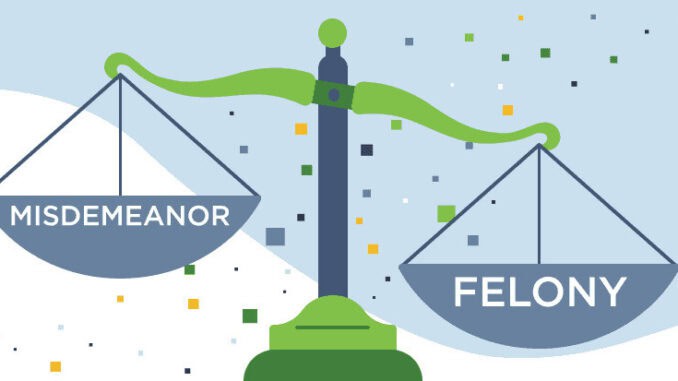
A misdemeanor is generally defined as a “lesser” crime. However, the term can be deceptive, as a misdemeanor conviction still carries the weight of a criminal record and can lead to jail time. Typical examples include simple assault, shoplifting (below a certain dollar threshold), first-time DUI, and disorderly conduct.
The defining characteristic of a misdemeanor is the punishment cap. In almost all jurisdictions, the maximum period of incarceration for a single misdemeanor is one year or less, served in a local or county jail rather than a state prison.
The Felony: Serious Crimes and State Prison
Felonies represent the most serious category of criminal offenses. These include violent crimes like murder and robbery, as well as “white-collar” crimes like large-scale embezzlement and high-value fraud. In 2026, many jurisdictions also classify certain repeat misdemeanors (such as a third DUI) as “felony-level” offenses.
The primary distinction for a felony is that the term of incarceration is greater than one year. Furthermore, felony sentences are typically served in state or federal prisons, which are distinct from local jails in their level of security and the nature of the inmate population.
| Feature | Misdemeanor | Felony |
|---|---|---|
| Incarceration | Max 12 Months (Local Jail) | 1 Year to Life (State/Fed Prison) |
| Fines | Typically < $2,500 | Can exceed $10,000+ |
| Court Rights | Right to Counsel | Right to Counsel & Preliminary Hearing |
| Expungement | Often eligible after 1–3 years | Difficult; some states ban it entirely |
Collateral Consequences: Beyond the Sentence
The true weight of a conviction often lies in its collateral consequences—the legal restrictions that persist long after a sentence is served. While a misdemeanor might complicate an employment background check, a felony conviction often triggers a “civil death” in several key areas:
- Loss of Civil Rights: In many states, felons lose the right to vote, serve on a jury, or hold public office (though some of these rights can be restored in 2026).
- Firearm Possession: Federal law generally prohibits any convicted felon from owning or possessing a firearm for life.
- Professional Licensing: Felons are often barred from obtaining licenses in law, medicine, nursing, and even certain trades like plumbing or real estate.
- Housing and Employment: Private landlords and high-level employers frequently use felony records as an absolute “knock-out” factor during the application process.
The “Wobbler” and Prosecution Discretion
In modern criminal law, some offenses are known as “wobblers.” These are crimes that can be charged as either a misdemeanor or a felony at the prosecutor’s discretion. Factors that influence this decision include the defendant’s prior criminal history, the presence of a weapon, and the extent of the victim’s injuries. Skilled legal counsel often focuses the pre-trial phase on negotiating a “wobbler” down to a misdemeanor to avoid the permanent stigma of a felony record.
Conclusion: A Lifetime of Impact
In conclusion, the line between a misdemeanor and a felony is the difference between a significant setback and a life-altering event. While the justice system treats them as distinct categories, the reality for the accused is that any criminal record requires a strategic defense.
As we move through 2026, the digital nature of criminal records means that “minor” offenses are more visible than ever to the public and potential employers. Whether facing a misdemeanor or a felony, the goal remains the same: minimizing the long-term impact on your record and your liberty. Ultimately, understanding the severity of the charge is the first step in mounting a defense that protects your future from the permanent weight of a conviction.
Leave a Reply