
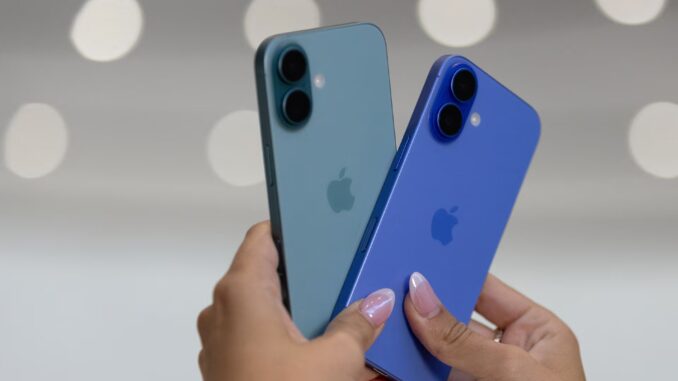
2026 Trial Looms Over iPhone 16 False Advertising Claims
Since the launch of the iPhone 16 series in late 2024, Apple has been entangled in a series of high-stakes legal challenges regarding its marketing promises. By March 2026, these individual complaints have been consolidated into a massive federal class-action lawsuit, Landsheft v. Apple Inc., currently proceeding in the Northern District of California. The iPhone 16 class action lawsuit alleges that Apple engaged in “bait-and-switch” tactics, charging a price premium for hardware based on advanced “Apple Intelligence” features that were non-existent at launch and, in some cases, remain undelivered nearly two years later.
The Core Allegation: The “Mirage of Innovation”
The primary grievance of the 69 lead plaintiffs involves the aggressive marketing campaign launched during WWDC 2024 and the September 2024 iPhone reveal. Advertisements, including prominent spots featuring actor Bella Ramsey, touted a “more personal Siri” capable of context-aware actions across different applications. However, the lawsuit contends that these features did not come pre-installed. It was not until March 2025 that Apple officially acknowledged that the most anticipated Siri enhancements would be delayed until 2026.
Plaintiffs argue that they paid between $799 and $1,199 for devices they would not have purchased—or would not have paid as much for—had they known the AI era was still years away. This struggle for transparency in digital marketing mirrors the issues raised in the Gmail lawsuit 2025, where consumers challenged the way tech giants represent the functionality of their platforms. For the iPhone 16, the legal term “AI-washing” has become a central theme, describing the practice of overhyping artificial intelligence capabilities to drive hardware upgrades.
Technical Defects: Touchscreen Dead Zones and “ProMotion Gate”
Beyond the software delays, the 2026 litigation also addresses hardware-level defects reported by users shortly after release. A significant portion of the iPhone 16 class action lawsuit focuses on “unresponsive touchscreens” on the Pro and Pro Max models. Users reported that the thinner bezels on the 16 series triggered an oversensitive rejection algorithm, causing the screen to ignore taps and swipes, particularly when the phone was used without a case.
Furthermore, a “ProMotion Gate” controversy emerged in 2025, with technical analysis suggesting that Apple capped the refresh rate of the iPhone 16 Pro display at 80Hz in various power-saving scenarios, despite advertising a “fluid 120Hz experience.” This perceived throttling of hardware performance to compensate for battery drain is a recurring legal battleground for Apple. It shares a similar technical complexity with the USAA patent infringement lawsuit, where the specific execution of a software-to-hardware interface is the difference between a “feature” and a “violation.”
Apple’s Defense: The “Incremental Benefit” Argument
In a motion to dismiss filed in early 2026, Apple’s legal team argued that the plaintiffs have suffered no actual injury. Apple contends that the iPhone 16 models included over “two dozen Apple Intelligence features” by the end of 2024, including Genmoji, Image Playground, and Writing Tools. They argue that the delay of a single feature (the revamped Siri) does not negate the value of the improved silicon, cameras, and other AI tools that were delivered at no extra cost.
Apple further maintains that its disclaimers—which noted that some features would “roll out over the coming year”—were sufficient to inform a “reasonable consumer.” This “reasonable consumer” standard is a common shield in corporate defense, much like the arguments used in the Koteiba Azzam State Farm lawsuit, where an institution relies on its fine print to justify its operational decisions. However, the court’s January 7, 2026, hearing focused on whether those disclaimers were “conspicuous enough” to counteract the loud, celebrity-driven TV commercials.
Timeline of the iPhone 16 Litigation:
- September 2024: iPhone 16 launches; users report touchscreen responsiveness issues.
- March 2025: Apple pulls “Conversational Siri” ads and confirms delays into 2026.
- April 2025: Multiple state lawsuits consolidated into Landsheft v. Apple Inc.
- January 2026: Judge denies Apple’s motion to dismiss regarding the false advertising claims.
- March 2026: Discovery begins; plaintiffs seek internal Apple emails regarding the “Siri delay” timeline.
Conclusion: Setting the Standard for AI Marketing
The iPhone 16 class action lawsuit is a watershed moment for the tech industry. As “Apple Intelligence” continues its piecemeal rollout with the expected iOS 26.4 update in late spring 2026, the courts will decide if tech companies can continue to sell “future promises” as current realities. For consumers, the outcome may lead to price-premium refunds or more stringent requirements for how AI is advertised. For more updates on consumer technology law and class-action settlements.
Leave a Reply