
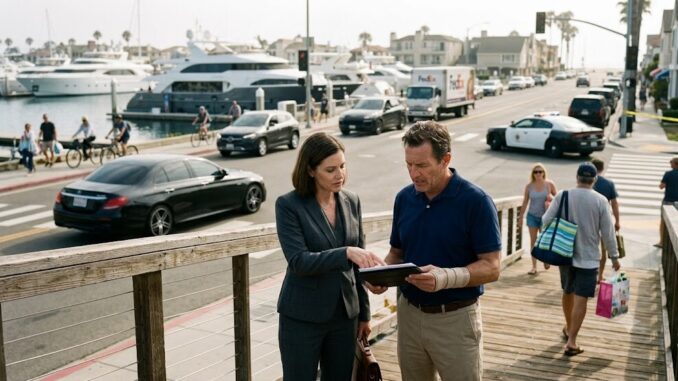

Newport Beach sits at the center of one of the most affluent and densely traveled coastal corridors in California. The combination of Pacific Coast Highway traffic, busy summer beach access, harbor and boating activity, and the year-round flow of residents, second homeowners, and visitors produces a steady volume of serious personal injury incidents. When those incidents involve significant property values, high-net-worth defendants, or commercial parties, the legal stakes climb quickly. For Newport Beach residents and visitors injured in an accident, understanding how California law actually treats fault and damages is the foundation of any meaningful response.
California’s Pure Comparative Negligence System
California is one of a small group of states that follow what is known as pure comparative negligence. Under this rule, codified through California Supreme Court precedent in Li v. Yellow Cab Co. (1975), an injured plaintiff can recover damages even if they bear most of the fault for an accident. A driver found 70 percent at fault can still recover 30 percent of their damages. A pedestrian found 90 percent at fault can still recover 10 percent. The rule is considerably more favorable to plaintiffs than the modified comparative negligence systems used in most other states, which cut off recovery once a plaintiff’s fault crosses 50 or 51 percent.
For Newport Beach cases, the pure comparative rule has practical consequences from the first contact with insurance carriers. Defense attorneys cannot use a partial fault argument to defeat a claim entirely. They can only use it to reduce the recovery proportionally. The dynamic shapes settlement negotiations from day one. Carriers know that a Newport Beach pedestrian case will not be dismissed because the pedestrian stepped outside a crosswalk. They have to engage with the merits.
The California statute of limitations for most personal injury claims is two years from the date of the injury. Wrongful death also runs two years. Claims against government entities, including the City of Newport Beach or Orange County, require a notice of claim filed within six months. Missing the notice deadline can foreclose the case entirely.
High-Stakes Patterns in Newport Beach Cases
Several features of Newport Beach injury cases drive their unusual complexity.
High-value property and commercial vehicles. Newport Beach traffic includes a higher concentration of luxury vehicles, exotic cars, and commercial fleet vehicles than most coastal communities. Crashes involving these vehicles often produce higher property damage claims, higher medical costs, and more aggressive defense work from insurers who recognize the financial stakes.
Tourist and out-of-state driver involvement. Pacific Coast Highway carries significant tourist traffic, particularly during summer months. Out-of-state drivers unfamiliar with PCH curves, ocean glare, and stop-light timing produce a recurring pattern of serious crashes. Tracking down and securing testimony from out-of-state witnesses adds practical complexity.
Boating and marine incidents. Newport Harbor sees significant pleasure boating traffic. Boat collisions, dock incidents, and water-sport injuries trigger their own legal framework, including California Harbors and Navigation Code provisions and, in some cases, federal admiralty law.
Premises liability at restaurants, hotels, and clubs. Newport Beach’s hospitality industry generates a steady stream of slip-and-fall, food poisoning, and security-related injury cases. Properties typically maintain detailed insurance programs, but the litigation is often hard-fought.
For an experienced perspective on these matters, a Newport Beach personal injury attorney at Sweet James handles motor vehicle accidents, pedestrian and cyclist cases, premises liability, and wrongful death matters across Orange County and the broader California coast.
How Insurance Carriers Approach Newport Beach Cases
Insurance carriers handling Newport Beach claims tend to be sophisticated and well-resourced. Several patterns recur.
Surveillance and social media monitoring. Carriers routinely review claimants’ social media accounts and may engage private investigators. A photo of a yacht outing or a hiking trip after the incident can be used to argue the injuries are not as serious as claimed, even when the photo predates the crash or shows activity the doctor approved.
Quick offers tied to medical milestones. Adjusters often present settlement offers calibrated to specific medical events, like the completion of physical therapy, before the long-term effects of the injury are fully understood. Accepting an early offer usually means signing a release that bars any future recovery.
Coordinated multi-carrier defense. When multiple defendants are involved, including drivers, commercial vehicle owners, and premises owners, the carriers often coordinate to assign fault among each other in ways that minimize each carrier’s share.
Coverage from outlets including the Los Angeles Times has documented broader patterns in Southern California insurance industry practices, including the use of automated claim handling tools and the regulatory responses these practices have prompted.
What Strong Newport Beach Cases Look Like
The strongest Newport Beach personal injury cases share several features.
Immediate, thorough medical care. The high speeds and high-impact nature of many PCH incidents mean that internal injuries, traumatic brain injury, and orthopedic damage can take days to fully present. A baseline ER evaluation matters more than the injured person often realizes at the time.
Complete scene documentation. Photographs of vehicles, the road, signage, ocean conditions if relevant, and any contributing factors are critical. Witnesses, including out-of-state tourists, need to be identified before they leave the area.
Preserved digital evidence. Event data recorders, dashcam footage, surveillance video from nearby businesses, and cell phone records can all support the plaintiff’s account. Information about California’s vehicle data laws is available through the California Department of Motor Vehicles.
Careful insurance handling. Recorded statements should generally not be given without counsel. Social media activity should be carefully managed. Communications with the at-fault carrier should be coordinated through legal representation rather than handled directly.
For Newport Beach residents and visitors who find themselves dealing with the aftermath of a serious incident, the combination of California’s plaintiff-friendly comparative negligence rule, prompt medical care, careful documentation, and experienced local counsel is what allows individual cases to push back against well-resourced insurance defendants. The legal framework is favorable. Using it effectively is the work.
Leave a Reply