Shielded by the Fourth
The Exclusionary Rule: The Court’s Filter
The primary remedy for a Fourth Amendment violation is the Exclusionary Rule. Established by the Supreme Court, this rule dictates that evidence obtained through unconstitutional means cannot be used against a defendant at trial. The logic is simple: to deter police misconduct, the government must be denied the “fruits” of that misconduct.
In 2026, this rule extends beyond physical items like drugs or weapons. It also covers digital data, such as GPS location history or cell phone contents, if they were accessed without a valid warrant or a recognized exception to the warrant requirement.
Fruit of the Poisonous Tree:
This doctrine goes a step further. If an initial illegal search (the “poisonous tree”) leads the police to find additional evidence (the “fruit”), that secondary evidence is also generally suppressed. For example, if an illegal traffic stop leads to a confession, both the stop and the confession may be thrown out.
Common Fourth Amendment Violations
While every case is fact-specific, several common scenarios often provide grounds for a motion to suppress:
- Lack of Probable Cause: Police searched a home or vehicle based on a “hunch” rather than specific facts that would lead a reasonable person to believe a crime was committed.
- Defective Warrants: A search warrant that was overbroad, based on false information (a Franks violation), or signed by a biased magistrate.
- Warrantless Entries: Entering a private residence without a warrant and without “exigent circumstances” (such as an immediate threat to life or the imminent destruction of evidence).
- Unlawful Extensions of Traffic Stops: Holding a driver at the side of the road longer than necessary to complete a traffic citation in order to wait for a K-9 unit to arrive.
The Strategic Pivot: The Motion to Suppress
Charges are rarely dismissed automatically. A defense attorney must file a formal Motion to Suppress. During a suppression hearing, the burden often shifts to the prosecution to prove that the search was conducted legally.
In 2026, defense teams increasingly utilize body-cam footage and digital forensics to catch inconsistencies in officer testimony. If the judge agrees that the search was illegal, the evidence is “suppressed.” If that evidence was the only proof of the crime—such as the bag of narcotics in a possession case—the prosecution will have no choice but to drop the charges because they can no longer meet their burden of proof at trial.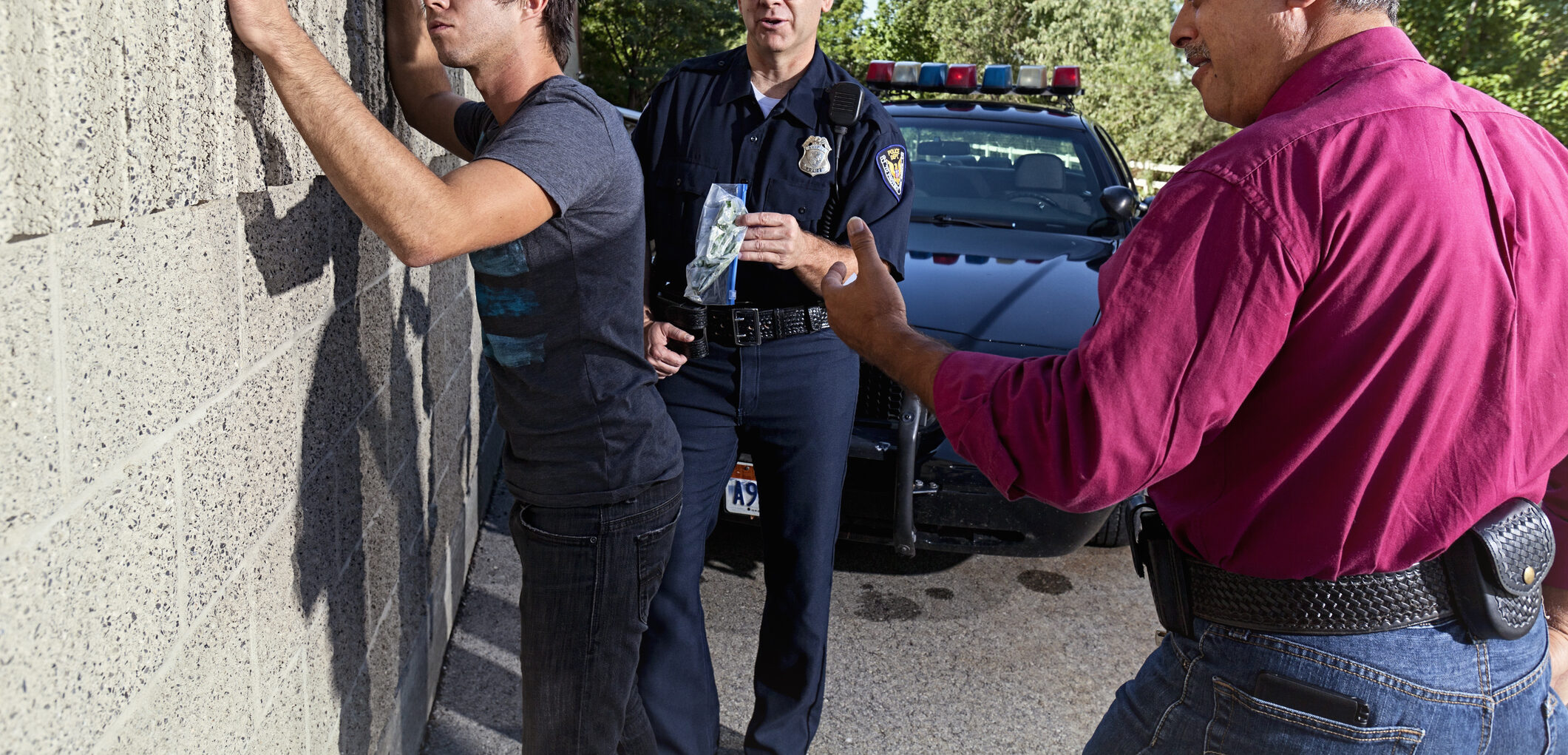
Exceptions to the Rule
It is important to note that the Exclusionary Rule is not absolute. Prosecutors often fight back using several established exceptions:
- Good Faith Exception: If police relied on a warrant they reasonably believed was valid, but was actually defective due to a clerical error, the evidence might stay in.
- Inevitable Discovery: If the prosecution can prove they would have found the evidence eventually through legal means, it may be admitted.
- Plain View: If an officer is legally in a position to see contraband “in plain view,” they may seize it without a warrant.
Conclusion: Upholding the Standard of Law
In conclusion, the dismissal of a case due to an illegal search is not a “loophole”—it is the system working as intended to protect the privacy of all citizens. Law enforcement must be held to the highest standard of conduct to ensure that the power of the state is not used arbitrarily.
As we move through 2026, the intersection of privacy and technology makes Fourth Amendment advocacy more complex than ever. Whether it involves a physical search of a backpack or a digital search of a cloud account, the core principle remains: the government must follow the rules. When they fail to do so, the law provides a clear remedy. Ultimately, a dismissal based on an illegal search serves as a vital check on government power, ensuring that justice is never built on a foundation of constitutional violations.
Leave a Reply