Judge Howell’s Recusal Battle and 2026 Appeal
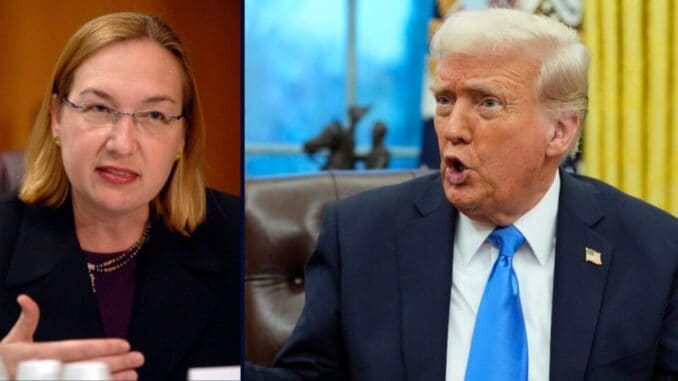
The high-stakes legal battle between the elite law firm Perkins Coie and the Trump administration reached a critical turning point in early 2026. The lawsuit, which challenged a March 2025 executive order targeting the firm for its past representation of Hillary Clinton, became a lightning rod for questions regarding judicial impartiality. While the administration’s legal team aggressively pushed for the disqualification of U.S. District Judge Beryl Howell, citing her previous sharp rebukes of the President, the court ultimately upheld her right to preside over the case. As of March 17, 2026, the D.C. Circuit Court of Appeals is now managing a complex series of motions as the Department of Justice (DOJ) fluctuates on its commitment to defending the order.
The Motion to Disqualify: March 2025
On March 21, 2025, the Department of Justice filed a formal Motion to Disqualify Judge Beryl Howell. The government argued that Judge Howell’s comments during early hearings—where she famously stated that the administration’s arguments “sent chills down her spine”—demonstrated an “unacceptable appearance of bias.” The administration further pointed to her description of the executive order as a “playbook as old as Shakespeare” and an “overt attempt to suppress viewpoints.” However, on March 26, 2025, Judge Howell denied the motion to disqualify herself, ruling that her comments were based on the legal merits of the case rather than personal animus. This paved the way for her May 2025 summary judgment, which permanently struck down the executive order as unconstitutional.
The 102-Page Rebuke and “Personal Vendettas”
Following her refusal to recuse, Judge Howell issued a sweeping 102-page opinion on May 2, 2025. She declared that President Trump’s attempt to strip Perkins Coie of security clearances and federal contracts was a violation of the First, Fifth, and Sixth Amendments. In a passage that has since been widely cited by other law firms facing similar orders, Howell wrote that “settling personal vendettas by targeting a disliked business… is not a legitimate use of the powers of the U.S. government.” The ruling effectively restored the firm’s ability to operate with federal agencies and access government buildings.
- Constitutional Violations: The court found the order violated the firm’s right to free speech (First Amendment) and the clients’ right to counsel of their choice (Sixth Amendment).
- Irreparable Harm: Perkins Coie successfully argued that the “national security risk” label was a pretext that caused existential financial harm by scaring away major clients.
- Precedent for Other Firms: The ruling served as a model for similar successful challenges brought by other elite firms like WilmerHale and Jenner & Block throughout late 2025.
2026 Appellate Status: The DOJ’s “Sudden Reversal”
The case entered a chaotic phase in March 2026 within the D.C. Circuit. On March 2, 2026, the DOJ filed an unopposed motion to voluntarily dismiss its appeal, which would have allowed Judge Howell’s ruling to stand as the final word. However, in a startling move just 24 hours later, the DOJ filed a Motion to Withdraw that dismissal, indicating they intended to resume their defense of the executive order. As of mid-March 2026, legal milestones are back on the calendar, with the Appellees’ Opening Brief due on March 27 and a final response expected in April 2026.
Internal Linking and Institutional Integrity
The Perkins Coie recusal dispute is a primary example of the 2026 trend involving judicial independence in the face of executive pressure. This theme is echoed in the Newsom v. Trump National Guard lawsuit, which also tests the limits of federal authority. Furthermore, the AFT v. Ed IDR lawsuit showcases how court-mandated settlements are being used to protect established government programs. For updates on how digital data and corporate transparency intersect with these legal battles, see our latest on the Gmail lawsuit claim or the no proof class action lawsuit 2025 updates.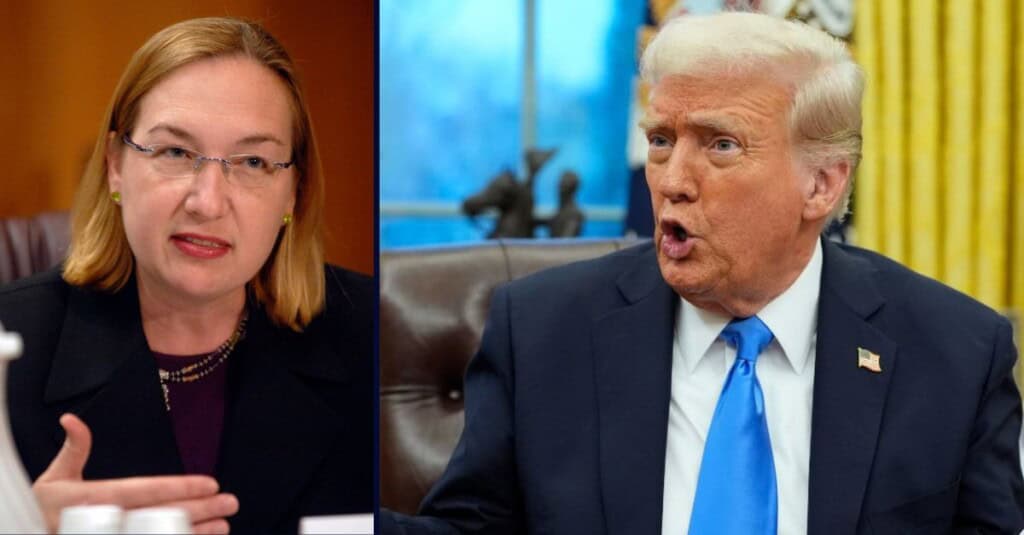
The Amicus Support: A Unified Legal Front
One of the most remarkable aspects of the Perkins Coie litigation was the surge of amicus support from across the political spectrum. In April 2025, over 500 law firms—many of which are direct competitors of Perkins Coie—signed a joint brief supporting the firm’s challenge. Legal organizations, including the ACLU and conservative groups like the Cato Institute, argued that allowing a President to “blacklist” a law firm for its political clients would destroy the independence of the American bar. This unified front was cited by Judge Howell as evidence of the “irreparable harm” the order posed to the entire legal profession.
Key Dates for the 2026 Appeal
Borrowers and legal professionals tracking this case should note the following upcoming deadlines in the D.C. Circuit:
- March 27, 2026: Filing of the Appellees’ Opening Brief by Perkins Coie.
- April 10, 2026: Deadline for the Government’s Response Brief.
- Summer 2026: Expected oral arguments on whether Judge Howell’s permanent injunction should be upheld or vacated.
Conclusion
The Perkins Coie lawsuit has moved far beyond a simple dispute over a law firm’s contracts; it has become a definitive test of whether the judiciary can remain a “neutral arbiter” when the executive branch attempts to exert control over the legal profession. Judge Howell’s refusal to recuse herself and her subsequent 102-page ruling have set a high bar for government accountability in 2026. We will continue to monitor the D.C. Circuit’s response to the DOJ’s fluctuating appellate strategy as the Spring 2026 session continues.
Leave a Reply