

Mortgage Records and Retaliation Claims
The intersection of housing policy and political warfare reached a fever pitch in early 2026 with the ongoing legal battle in Swalwell v. Pulte. Representative Eric Swalwell (D-CA) filed this federal civil lawsuit against Bill Pulte, the Director of the Federal Housing Finance Agency (FHFA), following a controversial criminal referral to the Department of Justice. As of March 2026, the case—docketed as 1:25-cv-04125 in the D.C. District Court—has become a central pillar in a broader debate over the “weaponization” of federal agencies. Swalwell alleges that Pulte abused his access to confidential mortgage databases at Fannie Mae and Freddie Mac to target the President’s political critics, transforming a regulatory position into a tool for political retribution.
The Referral: Allegations of Mortgage Fraud
The dispute was ignited on November 13, 2025, when Bill Pulte formally referred Representative Swalwell to the Justice Department for potential criminal prosecution. The referral alleged that Swalwell committed mortgage fraud by falsely claiming a home in Washington, D.C., as his primary residence to secure more favorable loan terms. Swalwell immediately fired back, labeling the claims “patently false.” In his 19-page complaint, the Congressman provided evidence of a sworn affidavit attached to his mortgage agreement which explicitly stated the D.C. property would be his wife’s primary residence, not his own. The lawsuit argues that Pulte ignored these facts to pursue a pre-planned narrative of criminal conduct.
Privacy Act and First Amendment Violations
Swalwell’s legal team, led by Hecker Fink LLP, has framed the case around two major legal violations. First, the suit alleges a breach of the Privacy Act of 1974, which was specifically designed to prevent government officials from using private information as a political weapon. Swalwell claims Pulte “scoured” databases at Fannie Mae and Freddie Mac without a valid regulatory purpose. Second, the suit asserts a First Amendment violation, arguing that the referral was a form of viewpoint-based retaliation intended to “chill and silence” Swalwell, who was serving as a House manager in President Trump’s impeachment trials and had recently entered the race for Governor of California.
- The “Pattern of Retribution”: The lawsuit notes that Pulte issued near-identical referrals against other prominent Democrats, including Senator Adam Schiff and New York AG Letitia James.
- Ouster of Ethics Officials: The complaint highlights that Pulte allegedly fired internal FHFA ethics officers and the Acting Inspector General who were investigating his access to these mortgage records.
- Seeking Injunctive Relief: Swalwell is asking the court to order the formal withdrawal of the criminal referral and is seeking unspecified compensatory damages.
Status of the Litigation in March 2026
As of March 15, 2026, the case is active under Chief Judge James E. Boasberg. Recent filings show that the court has granted several motions for counsel to appear pro hac vice, signaling that both sides are preparing for an extensive discovery phase. The litigation has gained additional weight following the dismissal of a similar criminal case against Letitia James, where a judge ruled that the appointment of the prosecutor pursuing Pulte’s referrals was “invalid.” This precedent has emboldened Swalwell’s team, who argue that the entire investigative apparatus used by Pulte was legally defective from its inception.
Internal Linking and Institutional Integrity
The Swalwell v. Pulte case is emblematic of a series of 2026 legal battles involving high-ranking officials. For instance, the Newsom v. Trump National Guard lawsuit also addresses the boundaries of executive authority and state sovereignty. Similarly, the Capital One FDIC lawsuit overcharge involves a major financial institution challenging federal regulatory accounting. For those following how digital privacy and government transparency intersect, the Gmail lawsuit claim provides essential context on the protection of private communications in the modern era.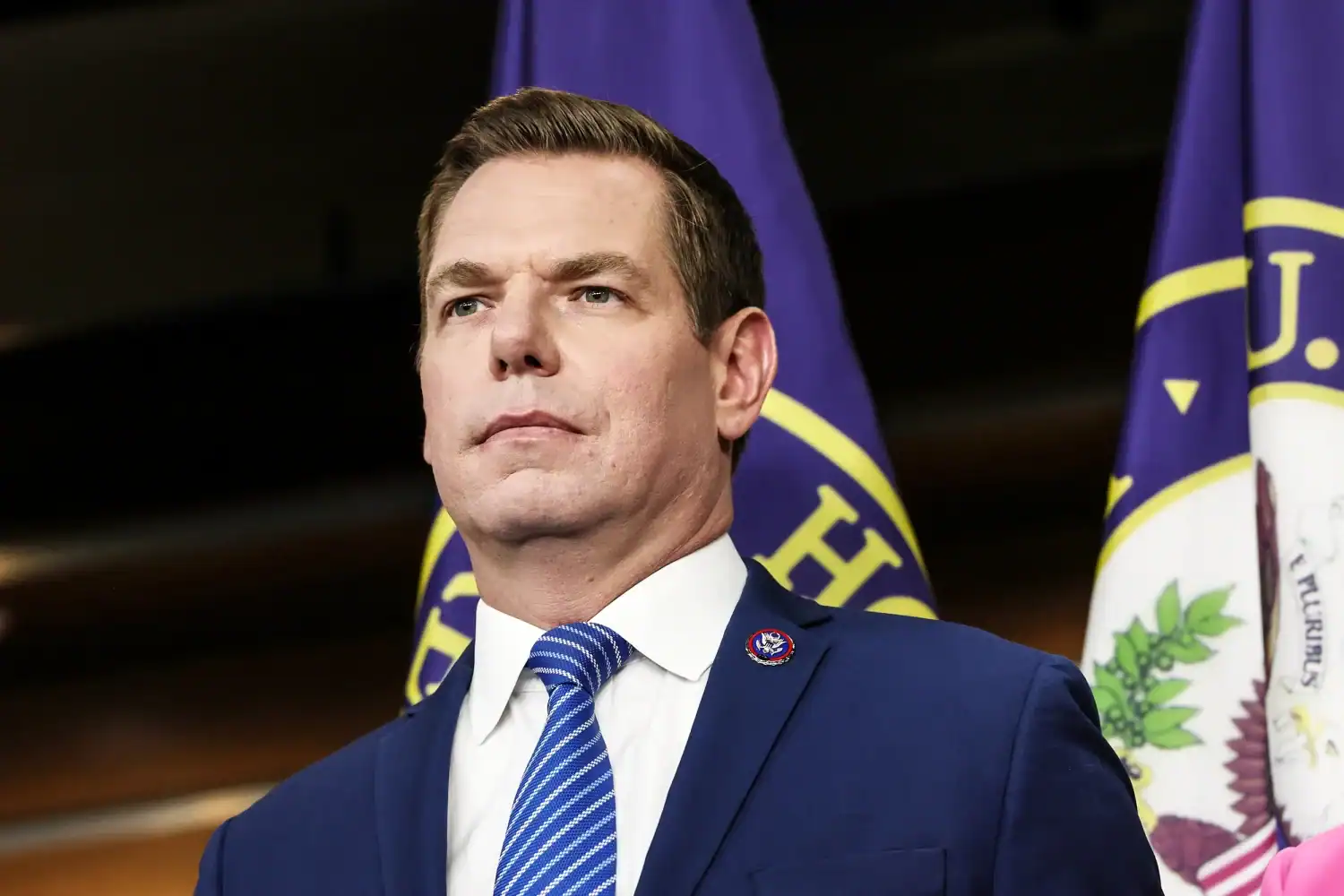
The FHFA’s Defense and the “Special Prosecutor” Factor
The defense for Bill Pulte and the FHFA maintains that as the director of the agency overseeing the secondary mortgage market, Pulte has a “fiduciary duty” to root out fraud wherever it exists. They argue that the referrals were based on objective data anomalies and that the political identities of the targets were coincidental. However, the discovery process in early 2026 has focused on communications between Pulte and Ed Martin, a Justice Department official tasked with conducting these specific mortgage fraud investigations. Records released through independent investigations by groups like Democracy Forward suggest that the probe into Swalwell may have skipped standard internal safeguards typically required by the FHFA Office of Inspector General.
What’s Next for the Case in 2026?
The D.C. District Court is expected to rule on the government’s motion to dismiss by late Spring 2026. If the case survives dismissal, it will move into a highly publicized discovery phase that could force the disclosure of internal FHFA communications regarding the selection of “targets” for criminal referrals. For Representative Swalwell, the stakes are high as he continues his gubernatorial campaign; a court-ordered withdrawal of the referral would serve as a significant political vindication. For more updates on high-profile corporate and political settlements, see our reports on the Cash App text message lawsuit or the AT&T lawsuit payout.
Conclusion
The Eric Swalwell v. Bill Pulte lawsuit represents a critical test of the Privacy Act’s ability to restrain executive power. It asks whether the tools intended to ensure the stability of the housing market can be redirected to investigate the personal financial lives of political opponents. As the 2026 court cycle continues, the resolution of this case will likely set a new standard for the protection of government officials from agency-led “retribution” campaigns. We will continue to track the 1:25-cv-04125 docket as key evidentiary hearings approach this summer.
Leave a Reply