The Newsom v. Trump Lawsuit: 2026 Resolution on National Guard Federalization
The landmark legal battle between California Governor Gavin Newsom and the Trump administration, officially known as Gavin Newsom, et al. v. Donald J. Trump, et al., has reached a final conclusion in early 2026. This high-stakes case centered on the “unlawful federalization” of the California National Guard, which began in June 2025 in response to civil unrest in Los Angeles. The resolution marks a definitive victory for state sovereignty and establishes critical boundaries regarding the President’s authority to deploy military forces within the United States without a governor’s consent. As of March 2026, the California National Guard has been fully returned to state command, following a series of significant court rulings that rebuked the administration’s use of military personnel for domestic law enforcement.
Origins of the Conflict: June 2025
The lawsuit was filed on June 9, 2025, after President Trump invoked 10 U.S.C. § 12406 to federalize approximately 4,000 members of the California National Guard—nearly one-third of the state’s active force. This mission, authorized over Governor Newsom’s explicit objections, tasked the Guard with performing civilian law enforcement roles, including arrests and crowd control, on the streets of Los Angeles. Governor Newsom and Attorney General Rob Bonta argued that the deployment violated the Posse Comitatus Act, a 19th-century law that restricts the military’s involvement in domestic policing. The administration contended that the federalization was a discretionary executive action necessary to maintain order, a claim that would be tested through multiple layers of the federal court system.
The Battle for State Command and the Ninth Circuit
Throughout the latter half of 2025, the case moved rapidly through the U.S. District Court for the Northern District of California and the Ninth Circuit Court of Appeals. In September 2025, Judge Charles Breyer issued a pivotal ruling, stating that the use of the National Guard for civilian law enforcement was illegal. However, a temporary stay allowed the federalization to continue while the government appealed. The conflict intensified as the administration extended the federalization orders into early 2026, leading to a “standoff” between state and federal authorities. Governor Newsom warned that the deployment diverted essential resources from state-assigned duties, such as wildfire management and medical response efforts.
- Posse Comitatus Act: The primary legal argument used by California to prevent the military from acting as a domestic police force.
- State Sovereignty: A core constitutional issue involving the Tenth Amendment and the Governor’s authority over the state militia.
- Troop Demobilization: The January 2026 return of service members to state control following the Ninth Circuit’s final order and the administration’s decision to drop its appeal.
The 2026 Resolution and Supreme Court Precedent
The final turning point occurred on December 31, 2025, when the Trump administration formally withdrew its appeal in the Ninth Circuit. This decision followed a 6-3 U.S. Supreme Court ruling in a similar case out of Illinois, which bolstered the legal standing of governors to retain command of their National Guard units. On December 31, Governor Newsom announced that the federal court had officially ended the “illegal federalization,” and he directed CalGuard leadership to work expeditiously to return all 4,000 service members home. By early 2026, the focus shifted to the demobilization process and the restoration of state-led missions, including the Counterdrug Task Force.
Internal Linking and Institutional Conflict
This clash between state and federal authority reflects a broader legal environment where institutional powers are constantly being challenged. For example, the Capital One FDIC lawsuit overcharge highlights separate tensions between private financial entities and federal regulatory bodies over large-scale assessments. Additionally, for those interested in how major corporate and government entities handle public interest claims, the Gmail lawsuit claim updates offer insight into digital-age litigation. These cases collectively illustrate that whether it is the deployment of troops or the management of financial data, the rule of law remains the final arbiter of executive power.
“No President is a King”: The Court’s Final Rebuke
The resolution of Newsom v. Trump carries significant implications for the future of federal-state relations. In his final order, Judge Breyer emphasized that the President cannot “trample a state’s power to protect its people” by creating a national police force without a clear, legally justified exigency. The court rejected the government’s argument that the President’s authority under § 12406 was unreviewable, asserting that the judiciary plays a vital role in ensuring that executive actions do not bypass the Tenth Amendment. This ruling has effectively ended the administration’s efforts to use the California National Guard as a “personal police force” for domestic operations.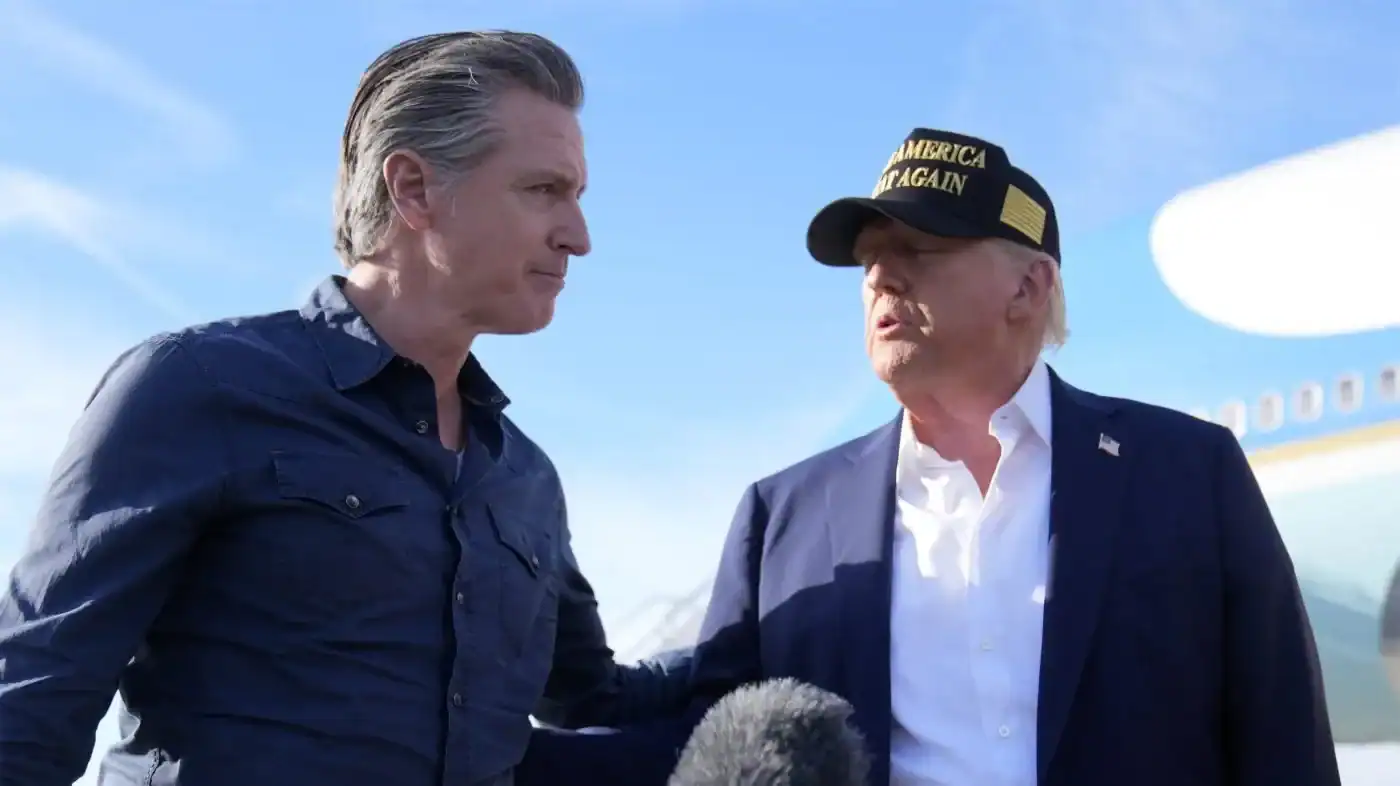
Long-term Implications for Constitutional Law
Legal scholars believe that the Newsom v. Trump National Guard lawsuit will serve as a definitive guide for future deployments. It clarifies that even under Title 10 federalization, National Guard troops cannot be used for civilian law enforcement unless specific statutory prerequisites—such as a rebellion or an invasion—are met. For California, the return of its service members means a restoration of essential public safety operations that were hollowed out during the six-month deployment. For more information on how state-level legal victories impact broader federal standards, see our analysis of the Cash App text message lawsuit and other high-profile privacy cases.
Conclusion
The conclusion of the Newsom v. Trump lawsuit in 2026 is a landmark moment for the American legal system. It reinforces the principle that military power is a tool of defense, not a domestic enforcement mechanism under the sole control of the executive branch. As the California National Guard returns to its primary mission of serving the state’s communities, the legal precedent established here will serve as a critical guardrail for future administrations. We will continue to monitor the final administrative steps of this case as the 2026 legal cycle progresses.
Leave a Reply