The Cost of the “Last Mile”: Amazon Facing Surge in Delivery Accident Litigation in 2026
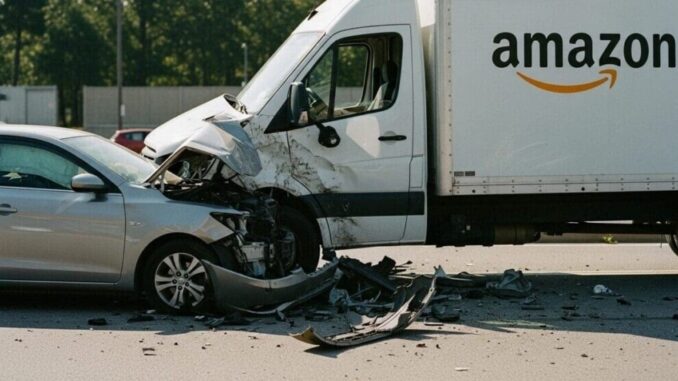
As of March 2026, the legal landscape surrounding e-commerce logistics has reached a fever pitch. While Amazon remains the dominant force in global retail, its “last mile” delivery network—comprised of thousands of independent Delivery Service Partners (DSPs) and Flex drivers—is increasingly under the microscope of the American judicial system. In the first quarter of 2026 alone, over 140 new “Amazon delivery accident” lawsuits have been filed across the United States. These cases are testing a pivotal legal theory: can Amazon be held vicariously liable for the negligence of drivers who wear Amazon uniforms and drive Amazon-branded vans, even if they are technically employees of third-party contractors? With several high-profile trials scheduled for late 2026, the outcome of these cases could fundamentally alter the economics of rapid delivery.
The “Fictitious Independent” Argument: 2026 Legal Strategies
The core of the current litigation wave centers on the “right to control.” Traditionally, Amazon has escaped liability by arguing that DSPs are independent businesses responsible for their own training, scheduling, and safety protocols. however, 2026 discovery documents in several consolidated cases have revealed the extent of Amazon’s digital oversight. Plaintiffs’ attorneys are presenting evidence that Amazon’s proprietary “Flex” and “Rabbit” apps monitor every second of a driver’s day—from seatbelt clicks and hard braking to the exact sequence of package delivery.
This level of granular control is being framed as a de facto employer-employee relationship. This focus on “digital oversight as control” is a recurring theme in modern law. Much like the Amazon refund class action lawsuit, where the company’s automated refund systems were found to be under its direct and exclusive management despite technical “glitches,” the delivery lawsuits argue that Amazon cannot outsource the risk while maintaining absolute control over the process. If a driver is pressured by an Amazon algorithm to meet an impossible delivery window, the argument goes, Amazon is the primary architect of the resulting accident.
The Role of AI and Telematics in 2026 Trials
A significant development in 2026 is the use of AI-driven telematics as the “star witness.” Most Amazon-branded vans are now equipped with Netradyne cameras that use artificial intelligence to detect driver fatigue, distraction, and traffic violations in real-time. In a landmark Florida case set for trial in May 2026, a plaintiff is seeking $12 million in damages after a DSP driver allegedly fell asleep at the wheel. The lawsuit argues that Amazon’s system flagged the driver’s “microsleep” events three times before the collision occurred, yet the algorithm allowed the route to continue.
This “knowledge of risk” is a powerful tool for plaintiffs. It mirrors the evidentiary shifts seen in the Humana Medicare Advantage ratings lawsuit, where internal data and real-time monitoring are being used to prove that a corporation was aware of systemic failures long before they caused public harm. In both the healthcare and logistics sectors, 2026 is becoming the year where “big data” is used to hold “big tech” accountable for what it knew—and when it knew it.
Internal Linking and Corporate Accountability
The fight for accountability in the delivery sector is part of a broader push for transparency across all major industries. The Sixt class action lawsuit settlement highlights how industries that rely on complex “contractual shields” and administrative fees are finally being forced to answer for the transparency of their operations. Whether it is a car rental company overcharging for repairs or a delivery giant distancing itself from its drivers, the 2026 courts are consistently leaning toward “piercing the veil” of these complex corporate structures.
Vicarious Liability and the “Uniform” Precedent
In March 2026, a California appellate court issued a significant ruling in Doe v. Amazon Logistics, stating that the “appearance of authority” is enough to proceed to trial. The court noted that because Amazon requires DSP drivers to wear branded vests and drive vans with the “Prime” smile logo, a reasonable consumer (or accident victim) would believe they are dealing directly with Amazon. This focus on “brand representation” as a basis for liability is also a central pillar of the Fox News defamation lawsuit Gavin Newsom, where the network’s brand and its hosts’ public personas are inextricably linked to the damages being sought. In 2026, your “brand” is no longer just a marketing tool; it is a legal liability.
Settlement Trends: 2025 vs. 2026
Data from the first quarter of 2026 indicates that Amazon and its insurers are settling “mid-tier” accident cases (those involving moderate injury and clear driver error) at a 15% higher rate than in 2025. Analysts believe this is a strategic move to prevent “bad facts” from creating new legal precedents in higher courts. This “settle to survive” strategy is visible in the AT&T class action lawsuit 2025, where the company opted for a $177 million resolution to avoid a prolonged trial that would expose its internal security vulnerabilities. For accident victims, this means that while a trial is a long road, the pressure on Amazon to “clear the docket” has never been higher.
Privacy, Reputation, and the “Dashcam” Factor
As these lawsuits progress, the privacy of the drivers themselves is becoming a secondary legal battleground. Amazon’s constant surveillance has sparked a “reputational” debate similar to the Mario Lopez lawsuit 2025, where the use of private recordings and digital history is being used to judge a person’s professional conduct. If an Amazon driver’s entire workday is recorded, is that footage the property of the driver, the DSP, or Amazon? In 2026, the answer to this question often determines who pays the settlement when an accident occurs.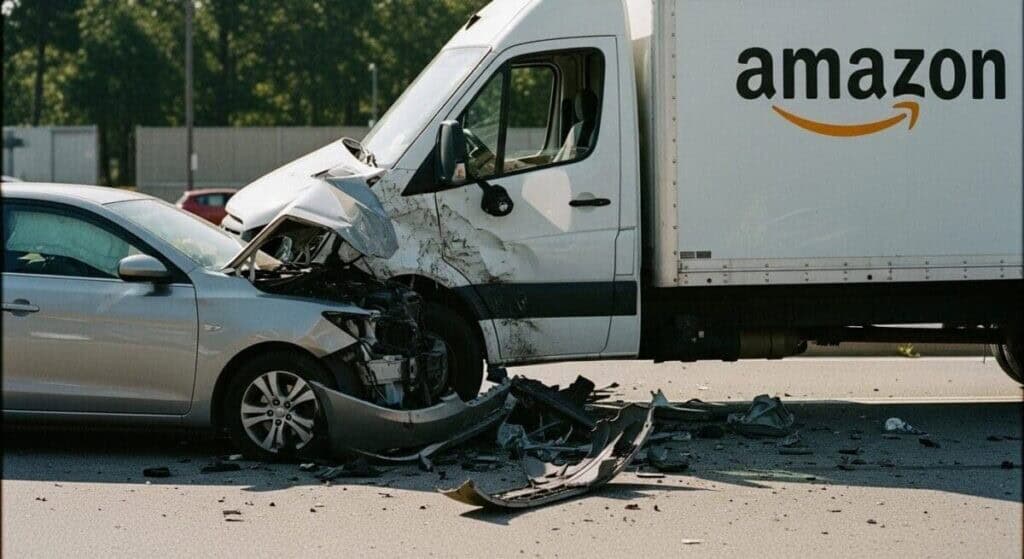
Impact on the “Gig Economy” Model
The mounting legal costs of delivery accidents are forcing a re-evaluation of the gig economy. In the Wisconsin congressional redistricting lawsuit, the battle is over the fundamental structure of how people are represented; in the Amazon cases, the battle is over the fundamental structure of how people are employed. If Amazon is forced to reclassify DSP drivers as employees to mitigate liability, the “Prime” delivery model could see significant price increases by late 2026. This potential economic shift is being watched as closely as the Ripple SEC lawsuit status 2025, where a single court decision could redefine an entire industry’s operating margins.
Conclusion: What to Do If You Are Involved in an Amazon Accident
For those involved in a collision with an Amazon-branded vehicle in 2026, the path to recovery is more complex than a standard car insurance claim. Because of the multiple layers of insurance—Amazon’s corporate policy, the DSP’s commercial policy, and the driver’s personal policy—it is essential to document the “brand” elements immediately. Taking photos of the driver’s vest, the van’s branding, and any visible technology in the cockpit can be the difference between a minor settlement and a major recovery.
Leave a Reply