
Alabama’s Madison County Redistricting Trial 2026
As of March 2026, the legal spotlight has shifted from Alabama’s statewide congressional maps to the granular, high-stakes world of local county commission boundaries. A federal judge in the Northern District of Alabama has officially cleared the way for a full trial in the Curtis-Richie v. Madison County case. This lawsuit, which challenges the “6-1” district structure in one of Alabama’s most populous and fastest-growing regions, is being hailed as a landmark test of Section 2 of the Voting Rights Act at the municipal level. For Black voters in Madison County, the trial represents the culmination of years of advocacy for a map that reflects the actual demographics of their community.
The Motion to Dismiss Denied: A Major Win for LDF
In early March 2026, a federal judge denied a motion to dismiss filed by the Madison County Commission. The commission had argued that individual voters and groups like the NAACP Legal Defense Fund (LDF) did not have a private right of action to sue under Section 2 of the Voting Rights Act—a legal theory that has gained traction in some conservative legal circles. However, the court vindicated the right of Black voters to have their day in court, ruling that the case should proceed as usual through the discovery and trial phases. This procedural victory is critical; without it, thousands of voters would have no recourse to challenge what they describe as an “illegal dilution” of their political power.
The “6-1 System” Under Fire
At the heart of the litigation is the Madison County Commission’s current structure, which consists of six single-member districts and one at-large chair. Despite Black residents comprising roughly 25% of the county’s voting-age population, they are currently only able to elect a candidate of their choice in one out of the seven seats. The plaintiffs argue that the maps were drawn to “crack” Black neighborhoods, splitting them across multiple districts to ensure they remain a minority in almost every instance. They propose a new map that would create a second majority-Black district, ensuring that representation on the commission is proportional to the actual population.
This struggle for equitable boundaries is not unique to Alabama. Similar arguments regarding the “cracking and packing” of voters are central to the Wisconsin congressional redistricting lawsuit, where partisan fairness is the primary goal. In Madison County, however, the focus is strictly on racial fairness and compliance with federal civil rights law. If the court eventually orders a new map, it could serve as a blueprint for dozens of other Southern counties facing similar demographic shifts.
Internal Linking and Legal Precedent
The Madison County trial is occurring alongside other major redistricting movements. For example, while local voters fight for commission seats, the SCOTUS climate lawsuit rejection case highlights a different type of jurisdictional battle—one between local autonomy and federal overreach. Both cases ask: *Who has the power to define the rules of the local community?* In Alabama, the court’s decision to proceed suggests that federal civil rights protections still hold significant weight over local legislative “discretion.”
Polarized Voting and the Gingles Test
To win at trial, the plaintiffs must satisfy the “Gingles Test,” a three-part legal standard established by the Supreme Court. They must prove that the Black community is sufficiently large and geographically compact to constitute a second district, that the community is politically cohesive, and that the white majority votes as a bloc to defeat Black-preferred candidates. Madison County’s recent history of polarized voting in local elections will be a central piece of evidence. This is a high bar, similar to the evidentiary requirements in the Mario Lopez lawsuit 2025, where intent and malice must be proven through exhaustive documentation.
The Defense: “Race-Neutral” Criteria
The Madison County Commission maintains that its 2021 redistricting plan was based on “race-neutral” criteria such as compactness and the preservation of traditional precinct lines. They argue that the current map is a “traditional” one and that forcing a second Black-majority district would be an unconstitutional racial gerrymander. This defense of “tradition” is a common theme in Southern litigation, appearing also in the Texas ten commandments lawsuit challenges. The court must now decide if these “neutral” criteria are simply a cover for maintaining a status quo that denies 25% of the population a fair voice.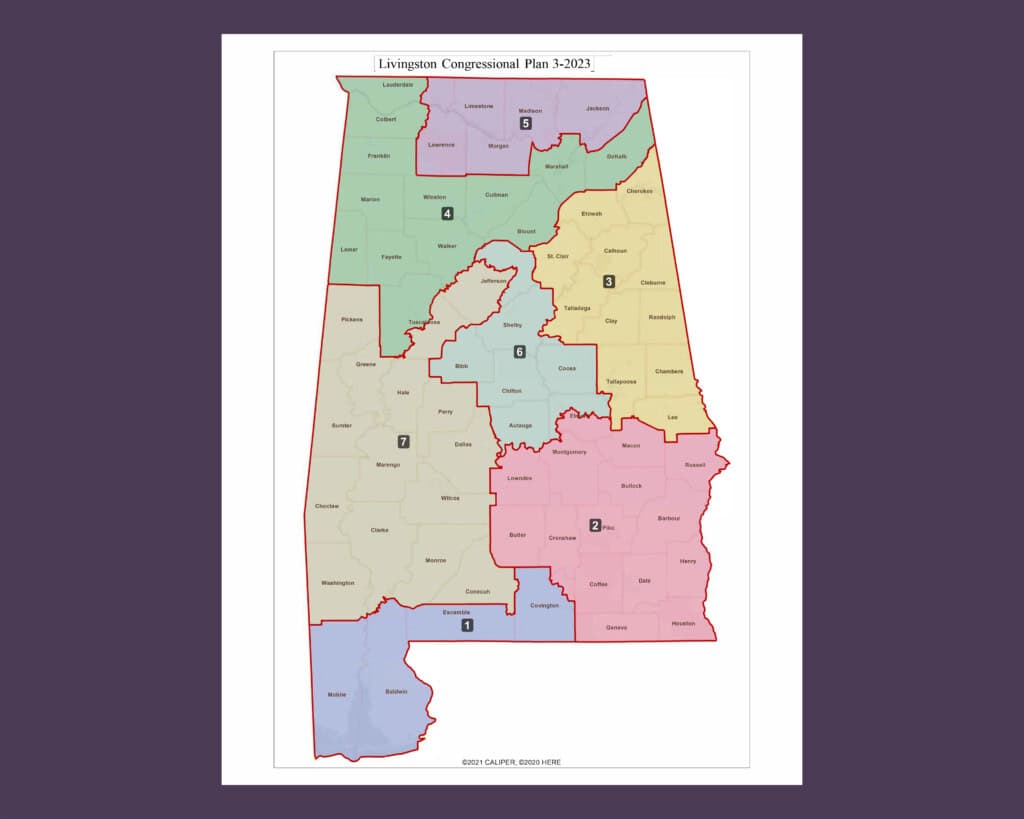
Timeline for the 2026 Midterms
With the 2026 midterm elections fast approaching, time is of the essence. The plaintiffs are seeking a preliminary injunction that would force the county to use a remedial map for the upcoming primary cycle. However, the “Purcell Principle” often discourages courts from making changes too close to an election. If the trial moves slowly, Madison County voters may be forced to wait until 2028 or even 2030 to see a fair map. This administrative delay is a tactic often seen in corporate litigation, such as the Ripple SEC lawsuit status 2025, where procedural hurdles are used to postpone final accountability.
Conclusion
The Madison County redistricting trial is a pivotal moment for the Voting Rights Act in 2026. As one of the few remaining “private right of action” cases moving forward in the South, its outcome will define the future of minority representation in local government. Whether the court orders a second majority-Black district or upholds the “6-1” status quo, the decision will resonate far beyond Alabama. We will provide daily updates as expert testimony begins in Huntsville this spring.
Leave a Reply