
Wisconsin Congressional Redistricting Case Updates for 2026
Wisconsin has long been the epicenter of the American redistricting war, and 2026 is proving to be a defining year for the state’s political geography. A high-stakes lawsuit seeking to overturn the state’s current congressional maps is currently winding its way through a novel three-judge panel. At the heart of the dispute is the question of whether the current boundaries—which currently favor Republicans in six out of eight districts—constitute an unconstitutional partisan gerrymander in a state that is famously split 50-50 in statewide elections. This case represents a significant shift in judicial strategy, moving away from federal intervention toward state-level constitutional protections.
The Current Legal Landscape: A Divided Court
The litigation was sparked by two separate challenges: one brought by a bipartisan coalition of business leaders and another by Democratic voters. Both groups argue that the “least change” approach used to draw the 2021 maps effectively baked in a Republican advantage from a previous decade of gerrymandering. Plaintiffs are pushing for a “fair map” that would likely make the 1st and 3rd districts significantly more competitive for Democratic candidates. The argument centers on the principle that voters should choose their representatives, rather than representatives choosing their voters through sophisticated data modeling.
In early 2026, the Wisconsin Legislature moved to dismiss the case, claiming the three-judge panel lacks the authority to vacate a map previously upheld by the State Supreme Court. This jurisdictional battle is the first real test of a 2011 law that created this specific panel process. If the case survives dismissal, a trial is tentatively scheduled, though legal experts warn it may not conclude in time to impact the 2526 midterm elections. This delay is reminiscent of the slow-moving Ripple SEC lawsuit status 2025, where procedural hurdles often push final resolutions years into the future, leaving the electorate in a state of uncertainty.
Why 2026 Redistricting Matters
With a razor-thin majority in the U.S. House of Representatives, every seat counts. Wisconsin’s maps are seen as a top target for national political strategists seeking to tilt the balance of power. The outcome of this case could determine control of the House, affecting everything from federal budget negotiations to international policy. Similar high-stakes redistricting battles are occurring across the country, such as the Alabama county redistricting lawsuit, where the focus on minority voting power mirrors the Wisconsin focus on partisan equity and regional representation.
The Three-Judge Panel: An Unprecedented Path
The panel includes Circuit Judges David Conway, Patricia Baker, and Michael Moran. Their task is to determine if the 2021 maps violate the Wisconsin Constitution’s requirements for compactness, contiguity, and political fairness. The defense, led by Republican congressmen, argues that seeking relief so close to the 2026 election would be “unfair” to candidates and voters alike, potentially causing administrative chaos for the state’s elections commission. They maintain that the maps were drawn following established legal guidelines and that the courts should not interfere with the legislative process.
The “Least Change” Controversy
The “least change” metric—once a standard for court-drawn maps—has recently been criticized by the liberal majority on the Wisconsin Supreme Court. Chief Justice Jill Karofsky famously noted that the concept lacked a clear definition, making it an unreliable metric for ensuring constitutional compliance. This shift in judicial philosophy is what opened the door for the current lawsuit. Just as the Texas ten commandments lawsuit is challenging established norms in the south regarding the separation of church and state, the Wisconsin redistricting case is challenging the status quo of political boundary-setting in the Midwest.
Impact on Voter Engagement and Turnout
Political scientists are closely watching how this legal battle impacts voter sentiment. There is a growing concern that protracted legal battles over district lines lead to voter apathy, as citizens feel their votes are being marginalized by “cracking” and “packing” techniques. Conversely, some argue that the fight for fair maps has energized the base on both sides of the aisle. The 2026 cycle will serve as a litmus test for whether the public retains faith in the judicial system to serve as an impartial arbiter of democratic fairness. If the panel orders a new map, the logistical challenge of re-educating voters on their new representatives and polling places will be immense.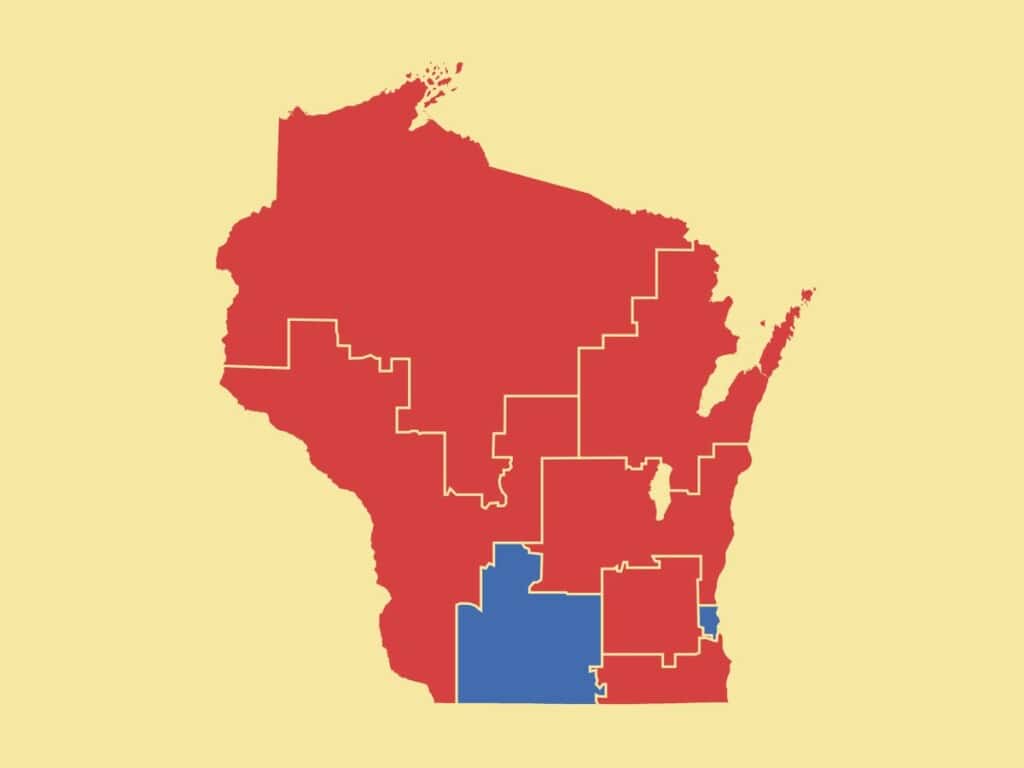
The Role of Technological Modeling in Redistricting
Modern redistricting is no longer just about colored pencils and paper maps; it involves sophisticated algorithms that can predict voter behavior with startling accuracy. The plaintiffs in the Wisconsin case have submitted expert testimony regarding “efficiency gaps” and “mean-median differences” to prove that the maps were mathematically optimized to produce a specific partisan outcome. The defense counters that these metrics are academic abstractions that do not account for the geographic clustering of voters—specifically the high concentration of Democratic voters in urban centers like Madison and Milwaukee. This debate over “natural packing” versus “intentional gerrymandering” is the central friction point of the trial.
Conclusion
As of March 2026, Wisconsin voters are in a state of limbo. While the current maps remain in place for the time being, the ongoing litigation represents an existential threat to the current Republican-leaning structure of the state’s congressional delegation. Whether a final ruling arrives before November or is pushed to 2027, the “Battle for the Map” will define Wisconsin politics for the remainder of the decade. The world is watching to see if the Badger State will establish a new national standard for partisan fairness or maintain its current trajectory. We will continue to provide updates as the panel deliberates on the future of Wisconsin’s democracy.
Leave a Reply